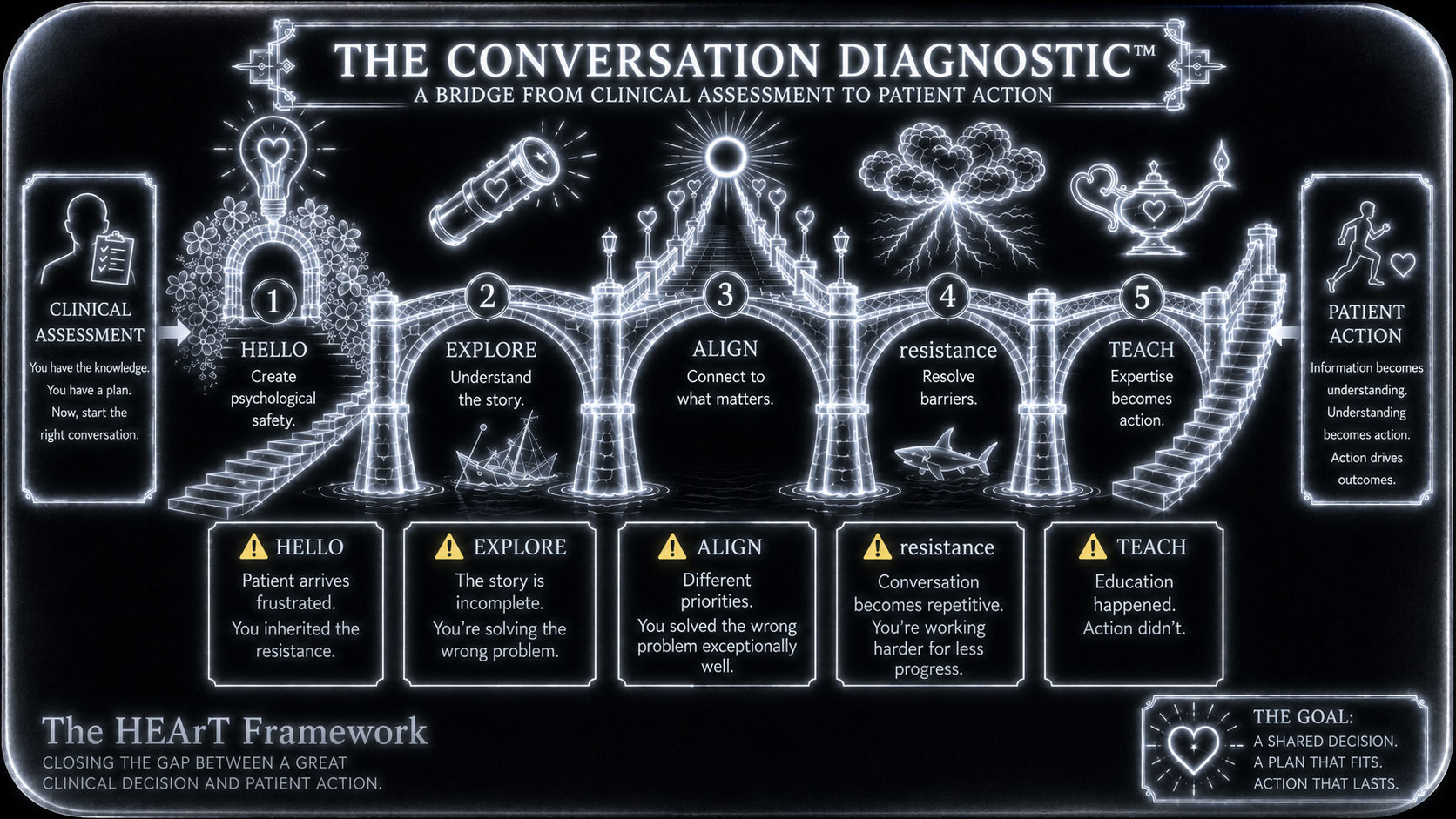
Patients decide whether it's safe to trust you before they decide whether to trust your advice. Learn how first impressions, environmental cues, and early moments of the conversation shape openness, trust, and everything that follows.
When It Goes Wrong:
The patient arrives upset before you've had the chance to introduce yourself. Every frustration from scheduling and parking to insurance and appointments with other providers is now part of your conversation.
You didn't provoke the resistance. You inherited it.
Hello: Create Psychological Safety
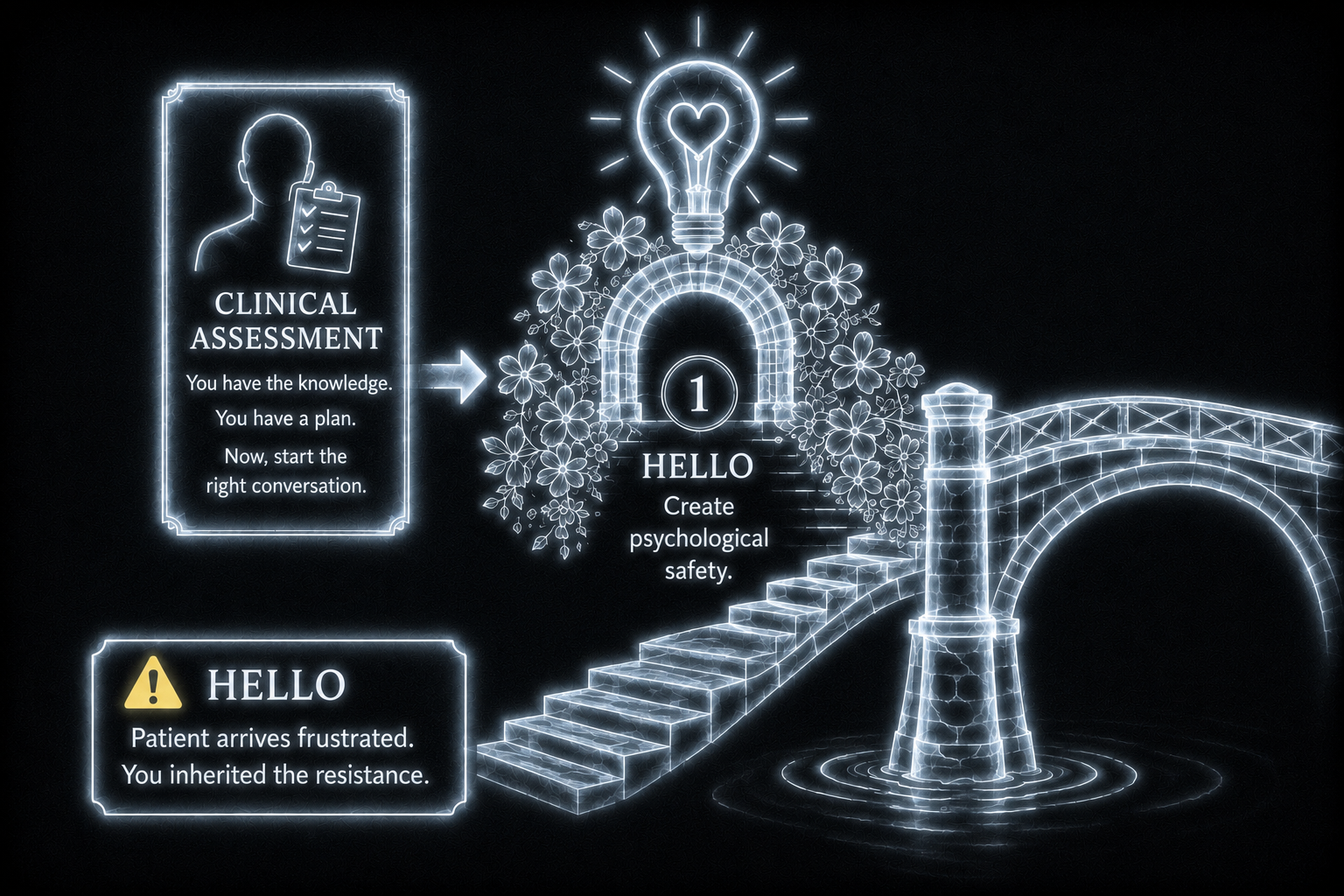
You Inherit the Conversation

You can do everything right and still inherit resistance.
Before you meet the patient, dozens of experiences may have already shaped the conversation.
Maybe their insurance denied treatment. They waited months for an appointment. They couldn't find parking. They sat in an over-crowded waiting room. They had a frustrating interaction with the front desk.
Maybe they were referred from another provider after a disappointing experience.
None of those problems are your fault. But they often become your conversation.
I hear clinicians say things like:
"All my patients are angry at their insurance."
Or,
"My patients hate the parking lot, the waiting room, and my front desk."
They're usually right.
The problem is that frustration rarely stays where it started. By the time the patient walks into the treatment room, those experiences have already influenced their expectations, emotions, and willingness to engage.
This is why Hello matters.
The opening moments of a conversation are not just about introductions or building rapport. They are about recognizing that the person sitting in front of you may already be carrying frustration, disappointment, fear, or exhaustion that has nothing to do with you.
You don't need to fix every problem they experienced before they reached you.
You do need to recognize that you may have inherited the consequences.
The HEArT Framework begins with Hello because psychological safety often starts long before education, treatment, or behavior change. Before you can help someone move forward, they need to feel that this conversation will be different from the ones that came before it.