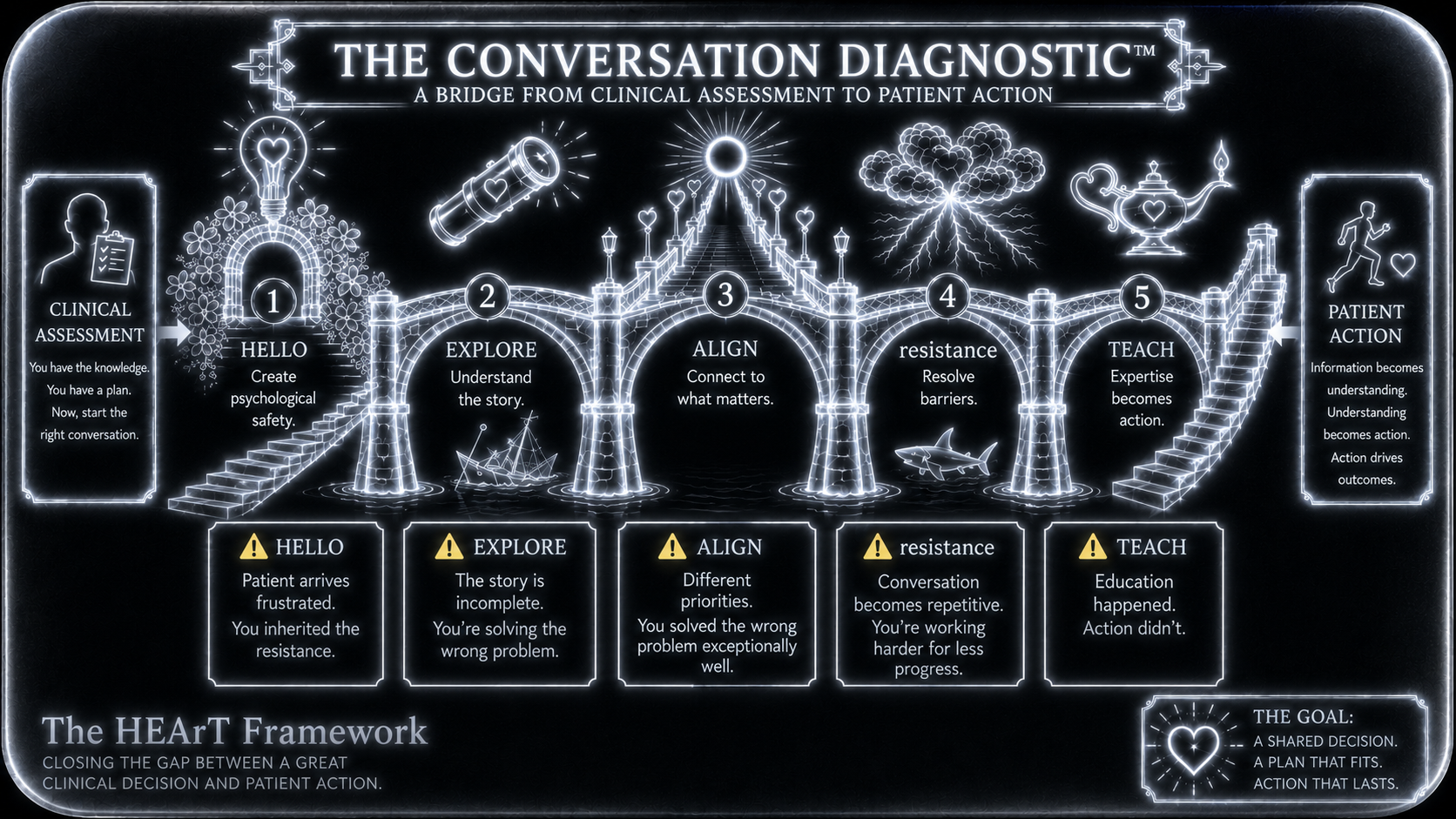
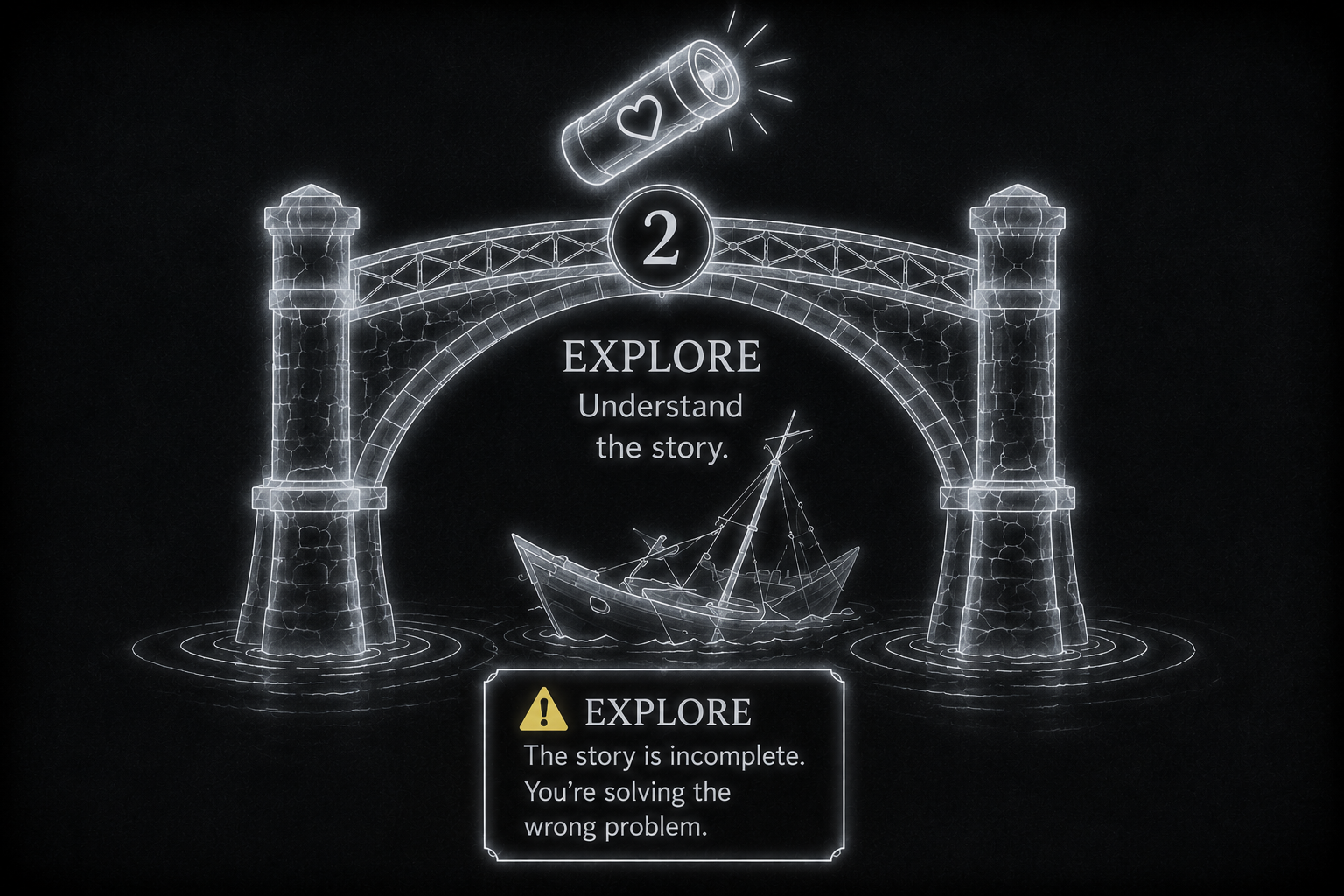
Explore: Understand the Story
The first story is rarely the complete story. Patients often arrive with self-diagnoses, confusing timelines, and important details they don't realize matter. The Explore stage teaches you how to uncover the information beneath the surface, ask better questions, and understand the person before deciding on the plan.
It means recognizing when you've started reasoning before you've finished exploring.
When It Goes Wrong:
The patient arrives convinced they know the diagnosis. The story comes in pieces. The timeline jumps around. Important details don't emerge until much later. You start solving one problem before realizing you've been hearing only part of the story.
The information isn't wrong. It's incomplete.
You Rarely Receive the Story in Order

Patients organize their stories by emotion and meaning. Clinicians organize them by time and clinical relevance.
Patients rarely tell their experience in chronological order.
Instead, they tell you what feels most important in the moment. They may begin with today's pain. Then mention an injury from ten years ago.
Jump to surgery. Back to last weekend.
Then casually mention they fell two weeks before everything started.
Sometimes the most important detail doesn't appear until twenty minutes into the evaluation.
If you've practiced long enough, you've probably experienced this.
You're halfway through choosing assessment tools. You're already developing a differential diagnosis. You think you understand what's happening.
Then the patient says something like:
"Oh...I probably should have mentioned..."
Suddenly everything changes.
The diagnosis may stay the same; your understanding of the problem doesn't.
This happens because patients aren't presenting a medical case.
They're telling their story.
Stories are organized by emotion, importance, and memory—not by the timeline you need for clinical reasoning.
The purpose of Explore isn't simply to gather information. It's to discover the information that changes your understanding.
That means resisting the urge to solve the problem too early.
Sometimes it means realizing the timeline you've built in your mind isn't the timeline the patient actually experienced.
Sometimes, it means asking one more question after you think you're finished.
The longer I practice, the more I realize that the most valuable question often comes after I think I know what's going on.
Before you decide what the story means, make sure you've actually heard the whole story.