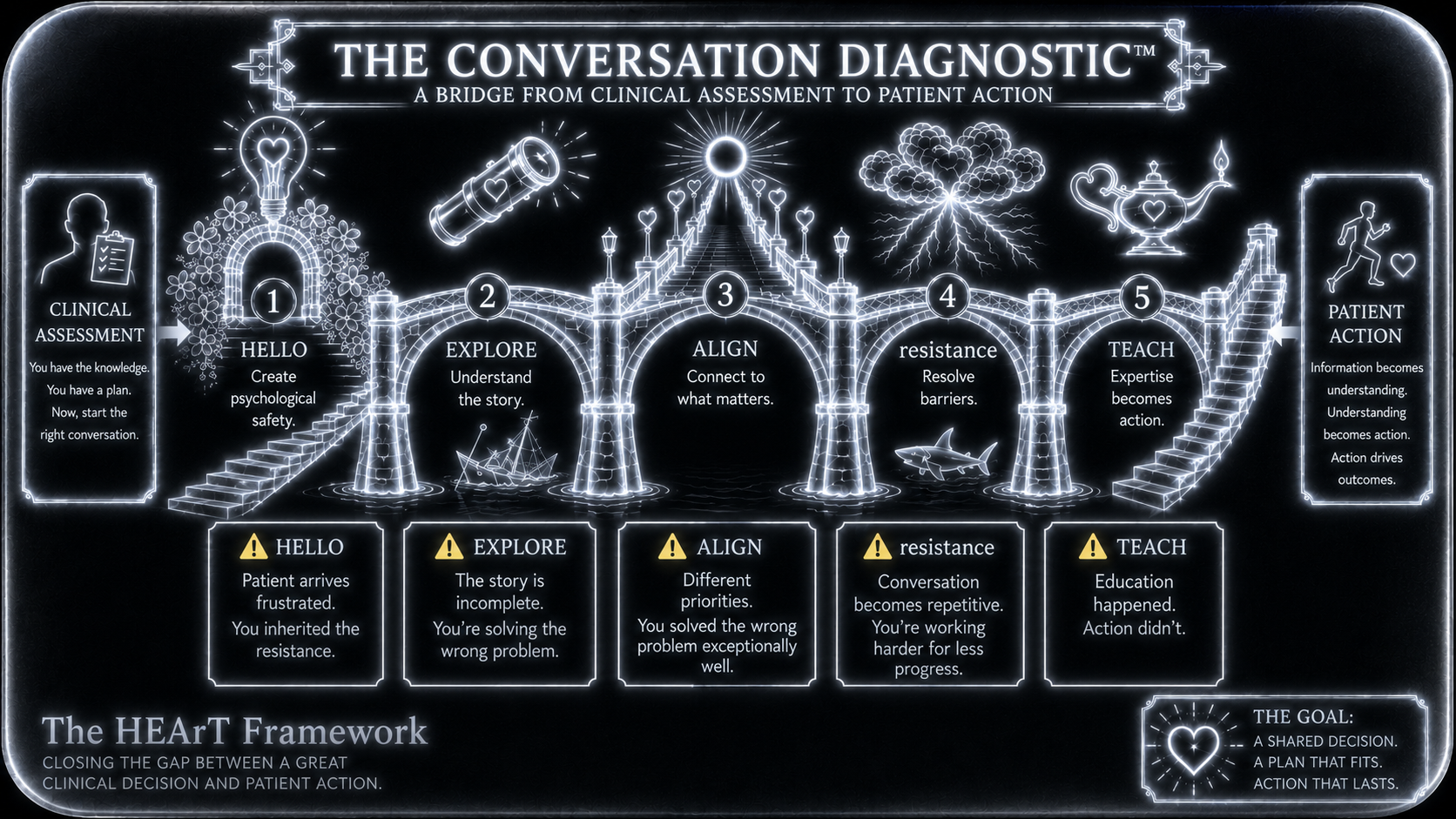

A great treatment plan isn't enough if it doesn't solve the problem the patient cares about most. The Align stage helps you build shared understanding, connect recommendations to what matters most, and create plans patients believe are worth following. When clinicians and patients move in the same direction, trust grows, resistance decreases, and follow-through becomes much more likely.
When This Goes Wrong: You spend twenty minutes explaining the treatment plan, answering every question, and solving the problem you think matters most. At the next visit, you discover the patient was worried about something completely different.
You solved the wrong problem exceptionally well.
Align: Connect to What Matters
Solve the Wrong Problem?

The easiest mistake to make is solving the wrong problem exceptionally well.
Healthcare professionals are trained to solve problems.
We're good at it. We identify patterns, prioritize findings, develop a diagnosis, and create a plan. That's what we've spent years learning to do.
But sometimes the problem isn't our clinical reasoning.
It's that we're solving a different problem than the patient is trying to solve.
The patient came because their shoulder hurts. You're worried about a rotator cuff tear.
They're worried about whether they'll be able to pick up their granddaughter this weekend. You're focused on protecting a surgical repair. They're focused on getting back to work before they lose another paycheck.
Both sides matter. But if you aren't solving the same problem first, even excellent care can feel irrelevant.
This is the purpose of Align.
Before deciding what to teach, make sure you've agreed on what matters most. One of the simplest questions in the HEArT Framework is also one of the most revealing.
"Can I make sure I understand? What feels like the most important part of this story to you?"
Sometimes the answer confirms exactly what you were thinking.
Sometimes it changes the entire direction of the conversation.
Alignment doesn't mean agreeing on every detail. It means agreeing on the problem that deserves your attention first.
The longer I practice, the more I realize that patients rarely resist solutions to their problem.
They resist solutions to what we think is their problem.
Before you invest your expertise solving a problem exceptionally well, make sure you're solving the right one.